Urban Development – India
9 min read
About 110 kms away from Imphal the capital of Manipur, Haollenphal is a small village with 70 households and around 400 people who mostly live off their land or work as daily labourers in the township of Moreh about 2 kms away. This little hamlet is slated to become one of the 9 in North East and one of the 100 Smart Cities of India that the Modi govt. has proposed. It’s being looked as a future trading centre for doing business with South East Asia, complete with immigration centres, check posts etc.
With about 31% of the population of India residing in India’s urban centres and contributing to more than 60% of India’s GDP, the rapid growth of India’s urban population leading to it’s development is undoubtedly one of the key processes that will affect the country’s future in the decades to come. Studies show that the hundred biggest cities in the world alone account for one third of the global gross domestic product. Within the European Union alone, the cities bring in as much as 85 percent of the GDP. Urban development with lever statistics like these show that cities hold the key to the future of earth – in both, good and bad sense.
Urbanising Fast
The global population continues to urbanise at a steady pace with more and more people moving to cities every single day. The world’s urban population is expected to double by 2050 which means we’re adding the equivalent of seven New Delhi Cities to the planet every single year. Urban areas also contribute a higher share of GDP. The Indian equation is not surprising either and is projected that urban India will contribute nearly 75% of the national GDP in the next 15 years. Between 1950 and 1990 the country’s population increased from 371 to 873 million, with another 350 million people added in the 20 years since then. The population is predicted to grow by another 300 million people by 2030, which would make a total of 1.5 billion. There would then be roughly 270 million more Indians in their employable years than there are today. Most of them will seek work in cities. So many people are leaving the countryside, that city residents may account for over 40 percent of the population by 2030. Sixty-eight cities will then have over one million inhabitants and six megacities will each be home to more than ten million people.
Essentially, this bodes well for India’s development as cities are job machines. Infrastructure projects, home construction, education, entertainment and services power the economy. Dynamic cities could quadruple India’s GDP by 2030 to USD 5060 per capita, and good planning now could help boost it by another one third by then. Cities are accordingly referred to as the engines of economic growth. There is accordingly a crying need for the cities to get smarter to handle this large-scale urbanization and finding new ways to manage complexity, increase efficiency, reduce expenses, and improve quality of life. The key features of a Smart City is in the intersect between competitiveness, capital and sustainability. The smart cities should be able to provide good infrastructure such as water, sanitation, reliable utility services, health care; attract investments; transparent processes that make it easy to run commercial activities simple and on line processes for obtaining approvals, and various citizen centric services to make citizens feel safe and happy
Studies show that the hundred biggest cities in the world alone account for one third of the global gross domestic product. Within the European Union alone, the cities bring in as much as 85 percent of the GDP. Urban development with lever statistics like these show that cities hold the key to the future of earth – in both, good and bad sense.
Methodology
Getting started with improvement measures in the big cities is the longest lever to promote growth and encounter global hazards head on. The magic word is sustainable urban development – a project that will do equal justice to the economy, the society and the environment in a balanced manner. In actual practice this means three things- firstly, urban planners must come up with innovative comprehensive concepts for future cities. Secondly, cost-efficient green technologies have to be developed, implemented and financing concepts created. And thirdly, urban residents must be integrated and convinced.
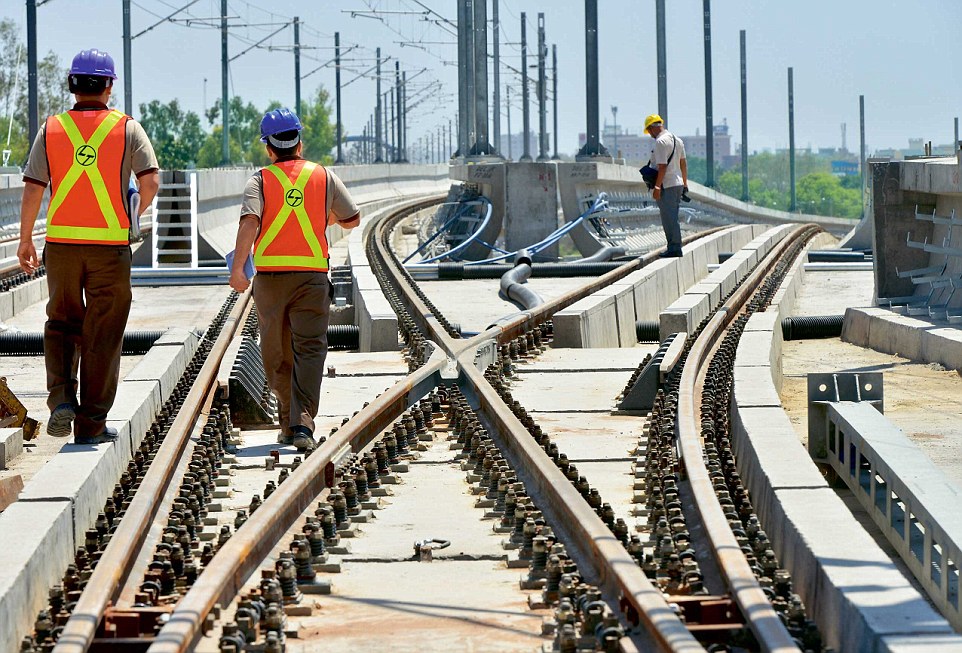
Rapid growth of India’s urban population is undoubtedly one of the key processes affecting the country’s development in the 21st century. According to the 2011 Census, the urban population grew from 286 million in 2001 to 377 million in 2011 – an increment of 91 million, which is larger than the rural population increment of 90.5 million for the first time since independence. The decade wise level of urbanization in the country as a whole increased from 27.7% in 2001 to 31.1% in 2011 – an increase of 3.3 percentage points during 2001-2011 compared to an increase of 2.1 percentage points during 1991-2001. These patterns pose serious challenges not only for providing urban infrastructure and civic amenities, but also for reproductive and child health services in urban areas. At the same time, over the last two or three decades, city spaces have also undergone rapid reconfigurations with the emergence of wealthy enclaves and new towns on the one hand and significant growth in slums and pockets of poor neighbourhoods on the other, that house the poorer, recent migrants and the older urban poor. All these processes together have made Indian cities highly unequal in terms of both economically and socially over the last two decades. The growing inequality in urban centres also resulted in increase in conflicts over the urban space as a range of urban inhabitants struggle to assert their rights to the city.
Core Indian Perspective
India is home to about 1.2 billion people, and the number is rising rapidly. Between 1950 and 1990 the country’s population increased from 371 to 873 million, with another 350 million people added in the 20 years since then. The population is predicted to grow by another 300 million people by 2030, which would make a total of 1.5 billion. There would then be roughly 270 million more Indians in their employable years than there are today. Most of them will seek work in cities. So many people are leaving the countryside that city residents may account for over 40 percent of the population by 2030. Sixty-eight cities will then have over one million inhabitants and six megacities will each be home to more than ten million people. Essentially, this bodes well for India’s development, because cities are job machines. Infrastructure projects, home construction, education, entertainment and services power the economy. Dynamic cities could quadruple India’s gross domestic product by 2030, to USD 5,060 per capita and good planning now could help boost the GDP by another one third by then.
As the global population continues to grow at a steady pace, more and more people are moving to cities every single day. The world’s urban population is expected to double by 2050 which means we’re adding the equivalent of seven New Delhi Cities to the planet every single year. Urban areas also contribute a higher share of GDP. The Indian equation is not surprising either and is projected that urban India will contribute nearly 75% of the national GDP in the next 15 years. Cities are accordingly referred to as the engines of economic growth. There is accordingly a crying need for the cities to get smarter to handle this large-scale urbanization and finding new ways to manage complexity, increase efficiency, reduce expenses, and improve quality of life. The key features of a Smart City is in the intersect between competitiveness, Capital and Sustainability. The smart cities should be able to provide good infrastructure such as water, sanitation, reliable utility services, health care; attract investments; transparent processes that make it easy to run a commercial activities; simple and on line processes for obtaining approvals, and various citizen centric services to make citizens feel safe and happy.
In the biggest cities, where the urban landscape includes terrible slums, even affluent families are affected by poor air quality, noise and congestion. A key element here is the construction of modern infrastructures. In the next two decades India’s cities will need to invest close to USD1.2 trillion. This means the average per capita investment in cities will have to be increased from the current level of USD 17 to USD 134. Take congestion, for example. To ensure free-flowing traffic, no more than 112 vehicles should occupy a one kilometre lane. But if you compare the current growth of the automobile market in India with the expansion of the road network, 20 years from now there could be 610 vehicles on each kilometre of road which would essentially mean a complete gridlock.
But the effects of traffic congestion aren’t limited to slow travel and poor quality of life, they also contribute to reduced economic output, high fuel consumption and healthcare-related costs associated with serious air pollution. Alongside new roads, India also needs an entirely new traffic concept whose central element is public transportation. In addition to over 19,000 kilometres of new roads each year, cities will also need up to 400 kilometres of new subway lines which is 20 times more than has been built in the last decade. In the years to come India will need between 700 and 900 million square meters of new housing space annually. That’s an area equivalent to two cities the size of Mumbai. Water consumption per capita will increase by 45 litres a day. And energy use could double in the coming decade.
This huge projection about having nearly fifty per cent of India living in urban areas in next decade poses some serious challenges for the current urban development teams. With large scale urbanization bring the need to plan and develop urban areas in a systematic manner, invest in infrastructure and improve the quality of life in these cities. There is an urgent need to address the downside of proliferating slums, increasing homelessness, growing urban poverty and crime, of relentless march of pollution and ecological damage. Without the latest technology, India’s cities will not be able to meet these challenges. One of the major requirements for urban development is to have the accurate and timely information in geospatial forms that allows generation and use of different maps, GIS data and applications to process information of urban areas that characterises social, economic, environment, and physical aspects critical in ascertaining services and amenities in planning and development of urban areas. With this the urban area also requires urban management as details of town planning or municipal functions – especially, regulation of land uses, building by-laws for management activities in urban planning, taxation and revenue, urban amenities planning, urban infrastructure management etc. Every urban area needs GIS – a comprehensive map-based Geographical Information Systems that powers urban planning and urban management. The GIS must meet the needs of the city at different levels of administration/planning/management, be based on modern data sources such as satellite and GIS databases, provide GIS-Decision Support System for urban planning/management.
Technology Collaborations
Yes without latest technology India’s cities will not be able to meet these challenges. But just hi-end technologically efficient Infrastructure solutions may not be the only factor here. Indian cities also need more effective administration and political reforms, such as the direct election of mayors. And the government needs to work in partnership with shantytowns and squatter communities to plan for low cost housing. Cities can offer reasonable quality of life only when they provide it for all inhabitants. And that includes not only India’s new elites, but also hard-working and below the poverty line people who will hopefully one day have a proper roof over their head instead of living on pavements and under bridges.
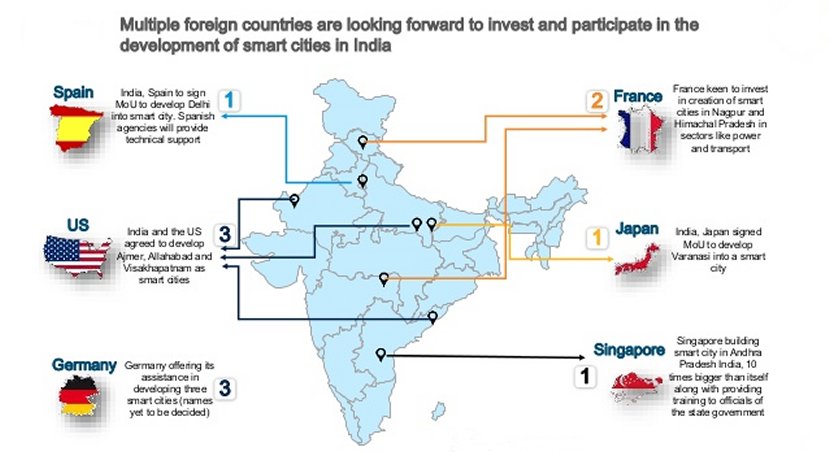
In what seems the Modi government’s thrust to improve urban living, the plan outlay for the urban development ministry has increased by 251.44%. The plan outlay which was Rs 6,561.34 crore in the revised Budget for 2013-14 has been hiked to Rs 16,497 crore for the current financial year. To meet the demands of better urban living from growing urbanization, besides increasing Plan Outlay, the government has offered tax and non-tax incentives to promote investments in urban infrastructure and housing sectors. Assistance to the ongoing Metro rail projects in Delhi, Jaipur, Mumbai, Kolkata, Bengaluru, Chennai and Kochi has been substantially increased by Rs 2,265 crore to Rs 8,025 crore as against Rs 5,759 crore. In addition, Rs 100 crore has been provisioned for the new Metro projects in Lucknow and Ahmadabad. In a major initiative, the government has proposed a corpus fund of Rs 50,000 crore to promote and finance infrastructure projects in urban areas on shared risk basis under the ‘Pooled Municipal Debt Obligation Facility’ over a period of five years with a corpus of only Rs 5,000 crores. A new ‘Mission on Low Cost Affordable Housing’ will be launched for which Rs 4,000 crores has been provisioned for providing cheaper credit for affordable housing to the urban poor, economically weaker sections and low income group segments through National Housing Bank. Looking forward the Indian urban agglomeration looks to be an efficient infrastructure and smart city planning that will meet the demands of a growing population.


