The Grit Of Delhi
5 min read

A labyrinth, a city of palaces, an open gutter, a landscape of domes, an anarchy, a press of people, a choke of fumes, a whiff of spices.’
The story of Delhi is about survival – time and again. A city which was ransacked and razed to nothing, not just once, but several times in history by invaders of different times, yet it rose again and again, for which legend gives due to the city’s inhabitants invisible soul that have made Delhi their residence and protected it and the curse that whoever rebuilt it would lose the city.
The flavour of myth overshadows all aspects, past and present, making Delhi seem as fabulous as the Baghdad of Arabian Nights. As one peels back the layers of Delhi’s history, that goes back in time, from the 1984 riots to the Indraprastha the mythical city of Pandavas it’s like experiencing the sheer forces that shaped Delhi over a 1000 years and beyond which leave tokens scattered around, some prominently visible as tourist landmarks. Yet others are unmarked ruins, their significance escaping passers-by. Still others are masked by conversion to goverment offices and hospitals. It is curious how many such exist undiscovered, leaving the city a still-fresh archaeological dig site.

The thrill of a hunt catches us as we wade through musty libraries and ancient documents and locate a hidden blocked pathway which was a secret tunnel from the Red Fort leading to the river for a getaway in times of danger . The claustrophobia and ruined grandeur of Old Delhi and the modern city of tree-lined avenues of Lutyens’ New Delhi (its architect) are as different from each other as their human remnants. Anglo indians left over from the Raj unable to reconcile to changing times, alienated from fellow Indians and excluded by Britain, speaking in permanently time-warped British accents and preserving English rituals grafted to a tropical setting adds the distinct colonial flavour. The eunuchs speaking courtly Urdu of a bygone Mughal period , the Sadhus of Nigambodh Ghats dating to the earliest period of Delhi’s history , and the newest – modern Punjabis, immigrants of Partition times now driving commerce in modern Delhi all adds to the unique colour of the city.
Like it or hate it New Delhi today is an extravagantly happening city, not only for its corridors of power, but it is also the melting pot for everyone who pour into Delhi from different corners of the country. Couple this with the hectic international traffic (diplomats, tourists, chiefs of the corporate world, academicians) and Delhi becomes one of the most cosmopolitan of all cities of India. The weather inspires a good deal of lush embroidered descriptions of coppery skies, dust talcumed greenery, and the enervating heat of the summer, and the bone-cracking chill of gray shroud-like winters.

Delhi is generally considered close to a 5000-year old city as per the ancient Indian text ‘Mahabharata’. It is widely believed to have been the site of Indraprastha—the legendary capital of the Pandavas during the times of the Mahabharata, founded around 3500 BC. Today it is the largest city, the second most populous metropolis in India and the eighth most populous metropolis in the world and it is known to have been continuously inhabited since at least the 6th century BC, though human habitation is believed to have existed since several millennia BC.


Though the excavated ceramic pottery and excavated layers of the ancient city seem to match what the verses of the Mahabharata indicate, more definitely possible in its favour is the existence of a village named Indraprastha, very close to the Purana Qila, that was destroyed by the British during the construction of Lutyens.
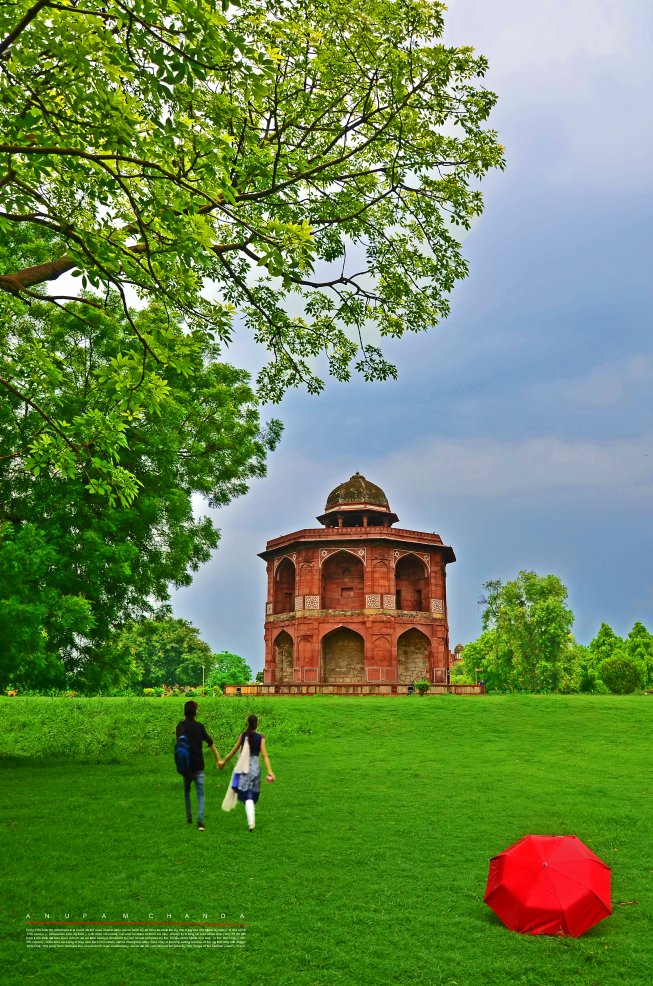
A city which was built, destroyed and rebuilt several times, particularly during the medieval era, as outsiders who successfully invaded the Indian subcontinent would ransack the existing capital city in Delhi, and those who came to conquer and stay would be so impressed by the city’s strategic location as to make it their capital and rebuild it in their own way. Whatever records exist of Delhi, they crown the city as the capital city of some empire or the other all through, with minor random breaks in between, making Delhi one of the longest serving capitals and one of the oldest inhabited cities in the world.


Nowadays though when people mention ‘Old Delhi’, they are generally referring to Chandni Chowk and the arterial roads stemming from it. The medieval walled city of Old Delhi fell into disrepair after being partly destroyed by the Indian uprising of 1857 and this very Chandni Chowk, once one of the grandest thoroughfares in India, is now a rather scruffy wholesale market. Still, its 400-year-old lanes house a tangle of colourful bazaars and many of the city’s primary sights. Incidentally Asia’s biggest spice market also happens to be located in the heart of chandni chowk.
This spice market in Delhi started in the 17th century. Now you know why Mughal cuisines are so rich in taste . The other wonder market in the area with a distinct flavor of the era which still stands strong despite the various invasions and varied cultural and political influences and erotion is the Kinari Market. Famous for wedding finery from sehra or grooms turbans, ornate lehengas, bridal veils, to gold brocade sherwanis one can shop an entire wedding wardroom here. And in the middle of all this right beside the glittering market in a narrow bylane lies the haveli or the house of the famous poet Mirza Ghalib.


True to what it’s known for Delhi is a sort of an island in the modern india, an island of ancient monuments which lies between the modern metro lines which represents the new delhi and the very early delhi of the rajput kings and the the most remarkable and wonderful thing about the city remains the fact that it has the most remarkable surviving capacity surviving any invasion be it from an ancient monarch or that of a modern corporation trying to invade the country through the city by asking the most profound question which is to redefine the meaning of civilization , to redefine the meaning of humanity, to redefine the meaning of modernity.