Velha
6 min read
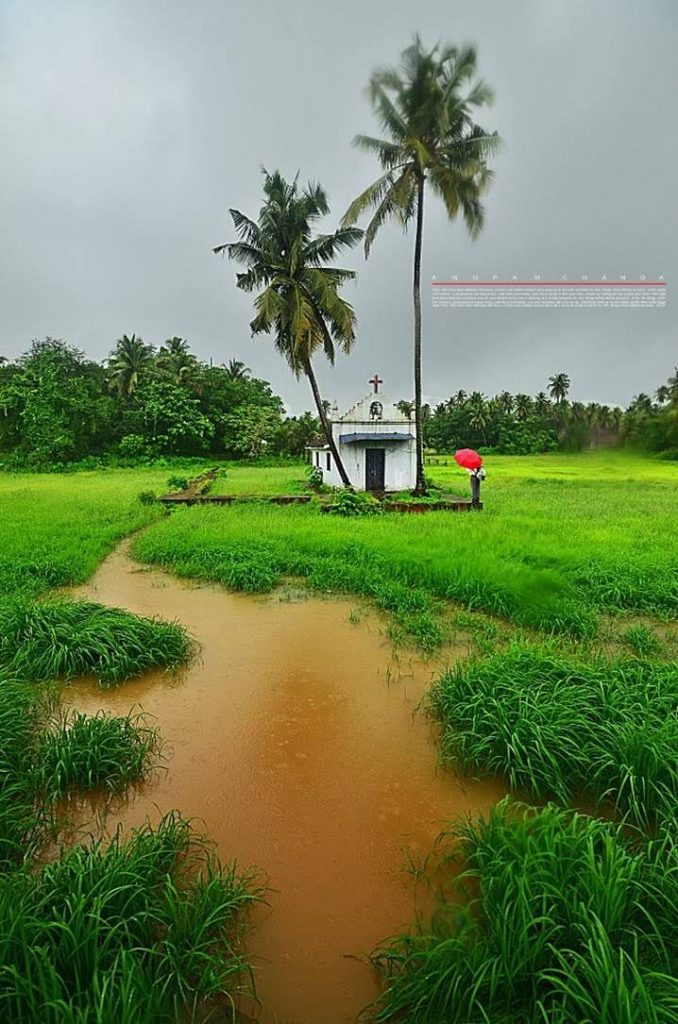
Although Christianity came to India with the arrival of St. Thomas in the first century AD it was the Portuguese who firmly implanted the faith in this land in the sixteenth century. After the conquest of Goa in 1510 the Portuguese began studding the land with churches and convents. The architects responsible for building these monuments were inspired by the architectural styles then prevalent in Europe. With it’s rich background Goa today is quite a charming place if you agree to experience it from it’s heritage point of view and keep it’s exotic beaches on a secondary agenda. The people, the place with it’s preserved yet modern Portuguese lifestyle and living, it’s people, customs and it’s architecture will take you to a different time and space very different from the modern India.

The Place
Old Goa also known as Velha Goa is such a charming place about 10 kms east from the madding crowd of the capital at Panaji. It’s incredible cultural heritage adds to it’s popularity as a tourist destination rich about experiences of a different era. This area around old Goa extending to 3800 sq kms between the Western Ghats and the Arabian sea, with the Sawanthwadi Ghats and North Canara forming respectively the northern and southern boundaries is now known as Goa. The ancient history of Goa starts in the third century when it was part of the Mauryan empire.
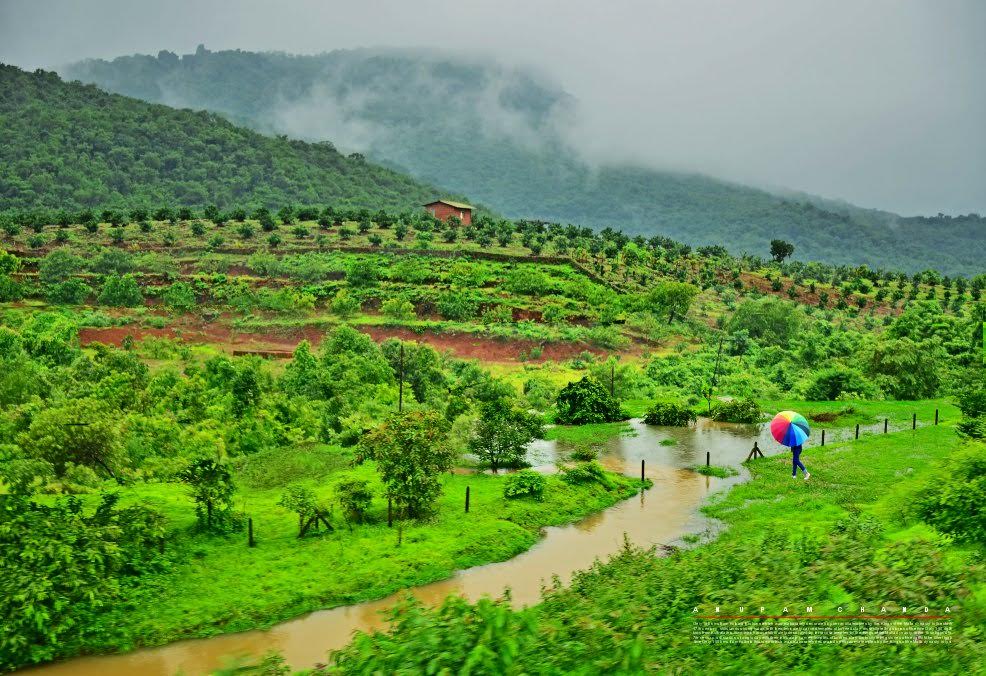
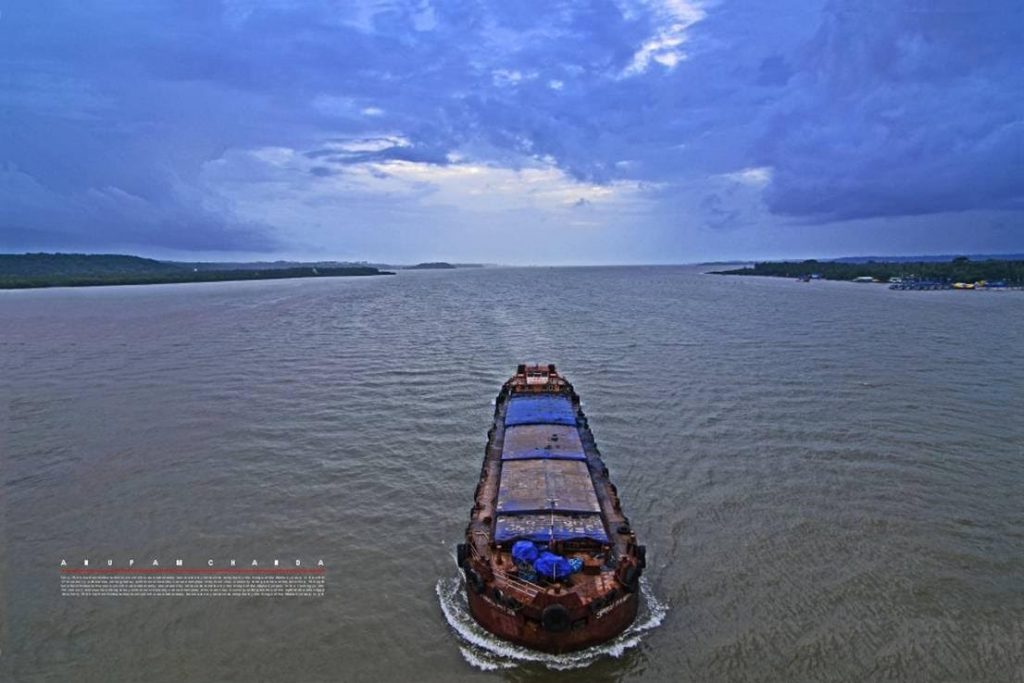
After changing hands several times from the Satavahanas – Bhoja dynasty- Chalukyas – Kadambas – Vijayanagara kingdom – Bahmanis- Bijapur Sultans, it was around the end of 1400 AD and after the landing of Vasco Dagama that the Portuguese after establishing their trading station at Cochin , was compelled to look for a permanent base away from opposition by the Zamorin of Calicut and competition in trade from the Arabs. Goa with it’s natural harbours and navigable rivers provided the solution to set up a permanent base for the Portuguese from where they could control the seas.Over time Afonso de Albuquerque succeeded in extending Portuguese control over Bardeze, Salcete, Daman, Diu, Nagar Haveli which after the onslaught of the Maratha and British empire were subsequently merged with the Indian Union in 1961. In the latter part of this span over 1000 years the rulers embellished Goa with many magnificent monuments which still fascinate visitors.
Architecture
For the Portuguese of the fifteenth and the sixteenth centuries politics and religion went hand in hand. Any conquest or colonization was done with religious zeal. They regarded themselves as the instruments of God on the mission of the propagation of the catholic faith all over the world. In the beginning of the seventeenth century, to which period the construction of most of the extant churches of old goa can be ascribed, the movement of the renaissance in Europe was in it’s last stages, gradually giving way to Baroque.
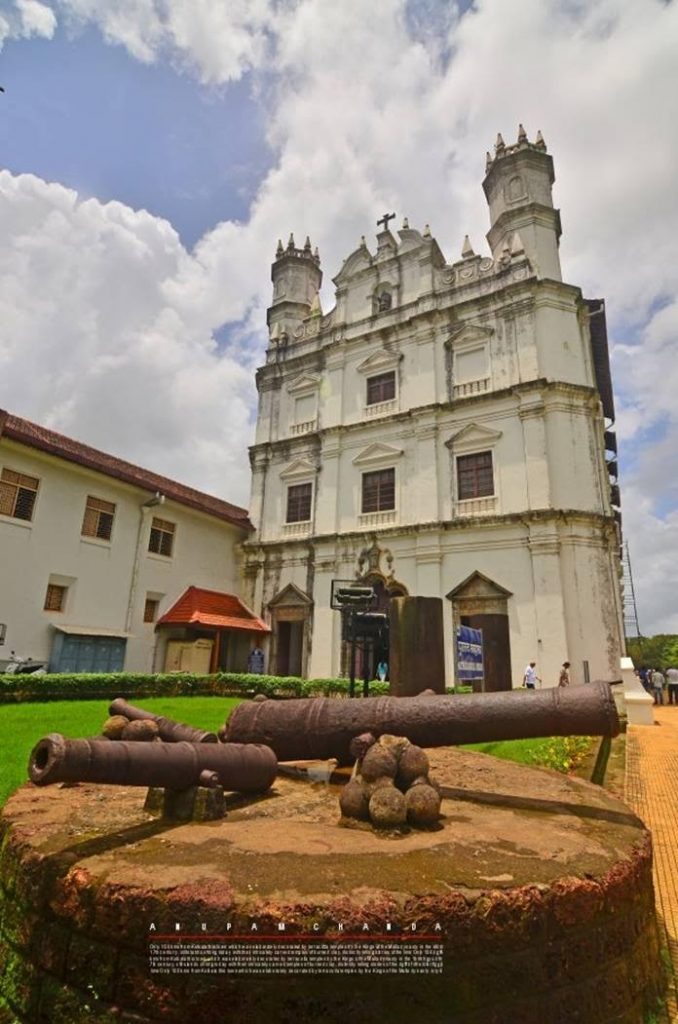
The architects responsible for the construction of the churches at old goa looked for inspiration to the Italian architects. Imitations of these churches in Rome, which had a touch of the renaissance with baroque confined to the interior sprang up. The church of St. Cajetan is modeled on the original design of St. Peter’s church in Rome. The church of Bom Jesus with it’s façade decorated with ionic, doric and Corinthian pilasters shows the application of the classical order. The Se Cathedral, with it’s Tuscan exterior, the corinthian columns at it’s portals, the raised platform with steps leading to the entrance, the barrel vault above the nave, is yet another example of the renaissance.

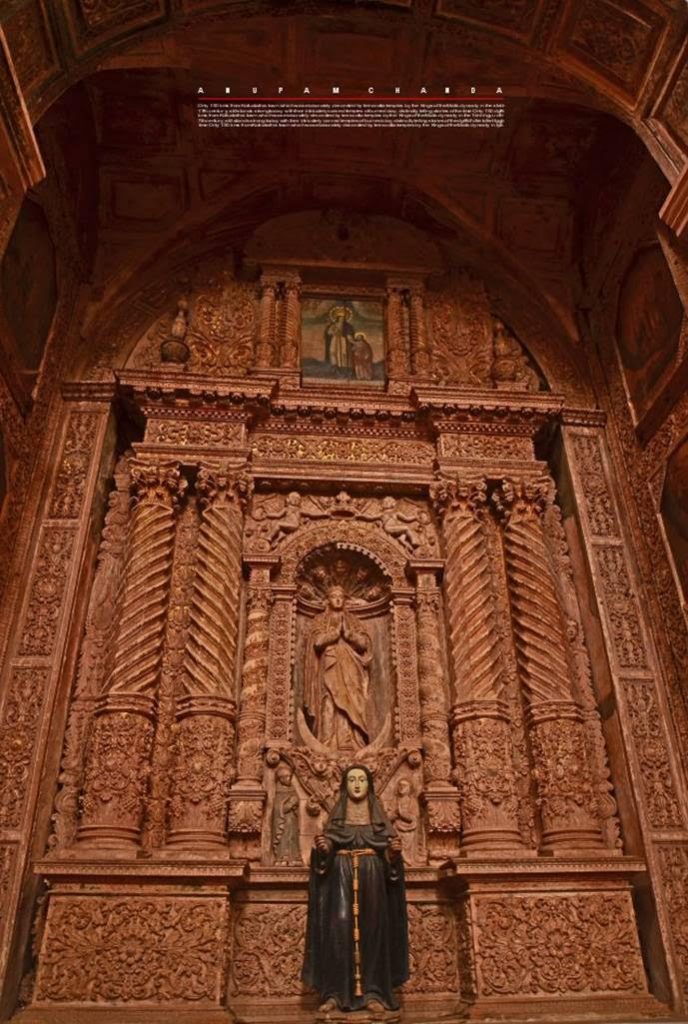
All the churches in old goa are build either wholly or largely of locally available laterite of reddish shade. Basalt, brought from outside Goa, perhaps from bessein, was used in the making of pilasters and columns to decorate the facades.
Monuments
The ancient grandeur of this city cannot be adequately visualized as most of the buildings of importance have now totally disappeared leaving only traces of their existence. On the eve of the Portuguese conquest, the city was protected by ramparts which enclosed, among other buildings, the palace of Adil Shah in the vicinity of the church of St. Cajetan and a mosque on the ruins of which the college of St. Paul was built.
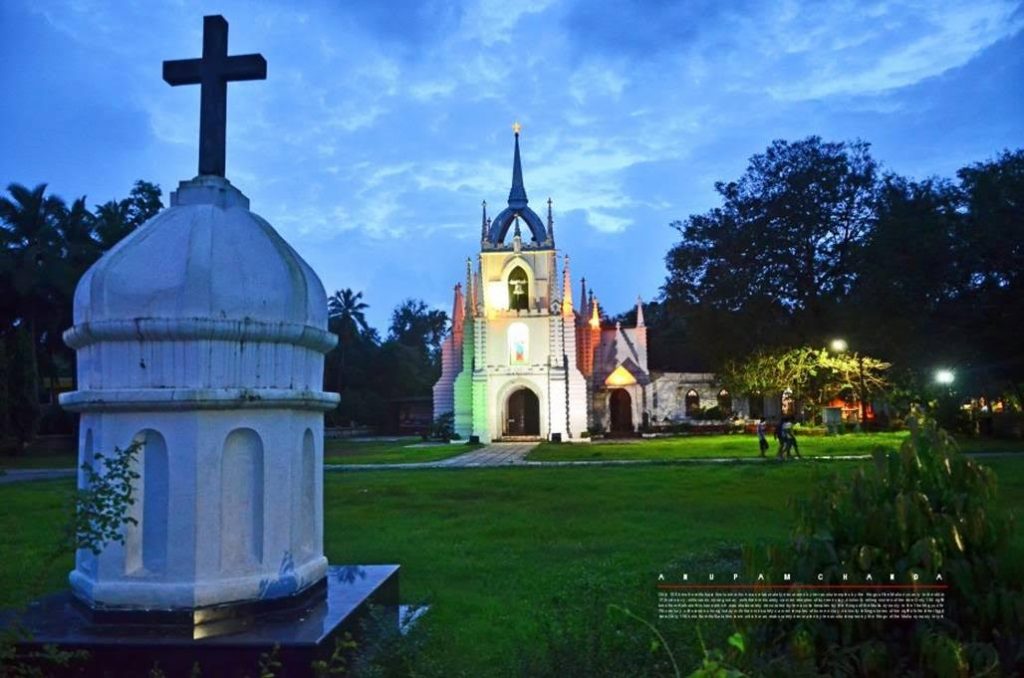
The Se Cathedral, Saint Anne’s Church, Basilica of Bom Jesus, St. Augustine’s Tower, Church Of Our Lady Of Rosary, Gate of Adil Shah’s Palace – each of these spectacular monuments have their individual significances and are a must visit on a tour to old goa.
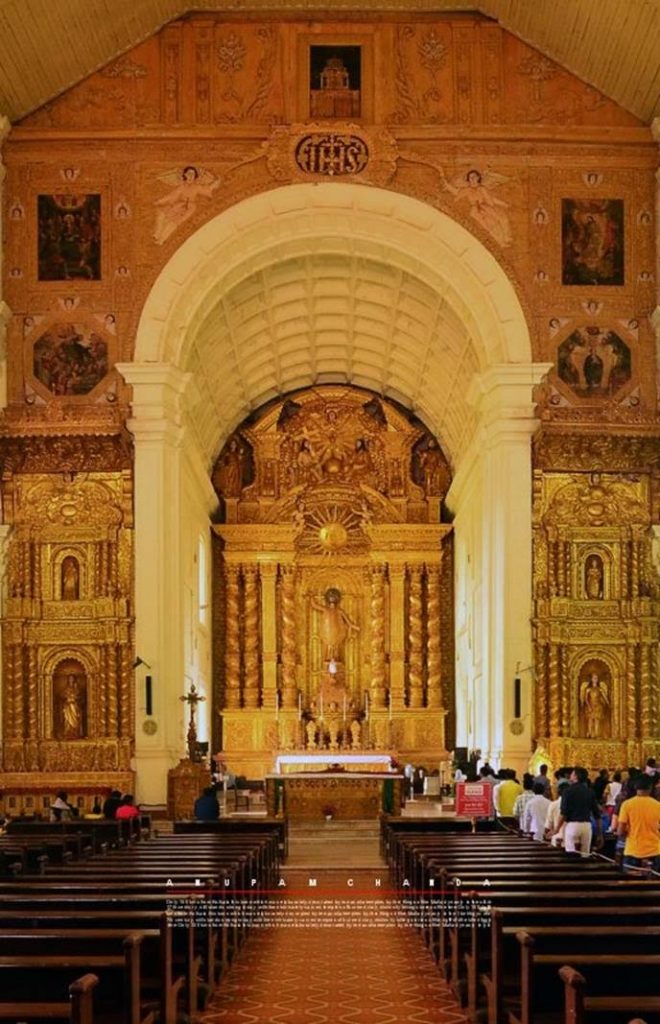
St. Francis Xavier
A small fleet of five ships set out of Lisbon in April 1541. The fleet was on it’s way to the East Indies and had among the passengers, besides the new governor of Goa, Dom Martin Affonso de Souza, a lean man of medium height named Father Francis. Though only 35 years of age had placed on him the arduous task of spreading Christianity among the subjects in the Portuguese colonies in the East. Filled with dedication and inspired by his early association with St. Ignatius Loyola, Francis was to prove not only equal to the task set forth but to surpass all other in his missionary zeal to become a legend as one of the apostles.

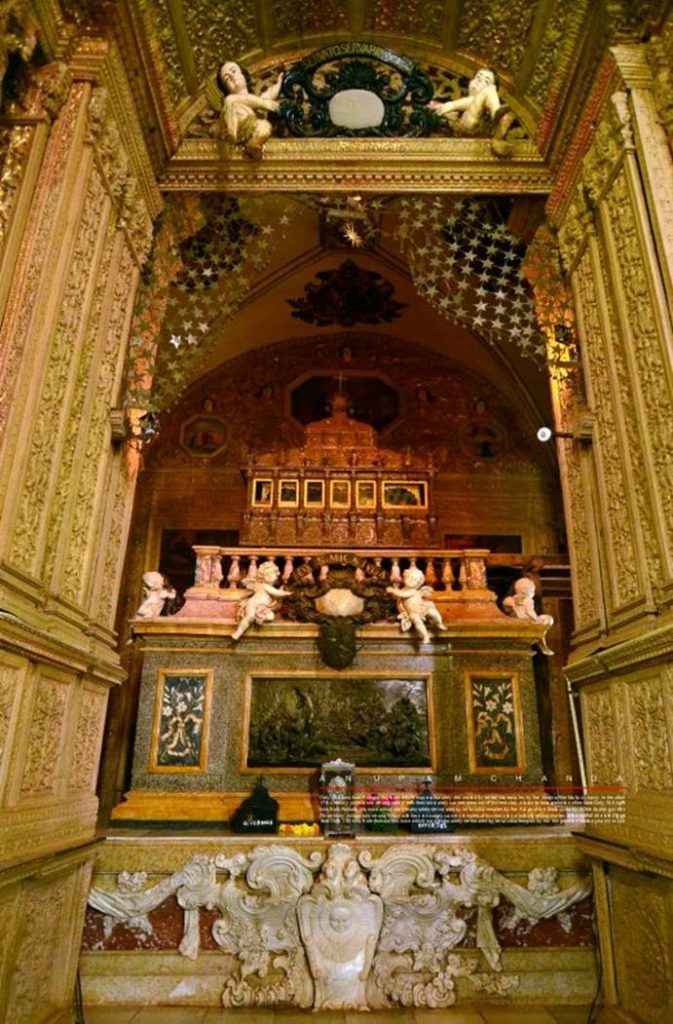
Franciscode Xavier y Jassu, who was later to become famous as St. Francis Xavier, fell ill and died in December 1552 at the early age of 46, 10 years after he first set foot in Goa. His body was buried in sancian, but subsequently taken to Malacca where he had done yeoman’s service for his faith and was buried in the church of ‘our lady of the mount’. Francis’s successor had the grave opened four months after the burial to pay his respects. Finding the body fresh and lifelike, and feeling the impact of the miracle, he had it brought to goa in march 1554. The body was kept in St. Paul’s college at first and in 1613 was transferred to the professed house of Bom Jesus. After the canonization of the Saint, a rich silver coffin was provided for the body which was removed to the gospel side in the church of Bom Jesus and later transferred to the epistle side of the same church where an artistic mausoleum was built, which draws the largest number of visitors in old Goa every day.

Portuguese Quarters
The other very beautiful part of Goa where one can also choose to stay on a visit, is the Fontainhas. This is a small slice of authentic Portuguese Goa located in the heart of it’s capital in Panjim . The small neighborhood consisting of a few lanes and by lanes, is full of brightly coloured houses which have a strong Portuguese influence in their architecture. This is the oldest latin quarter of the era flanked by Portuguese styled residential buildings, guest houses, hotels, restaurants and bakeries which is quite a sough after place if you are looking to experiencing the heritage of Goa.

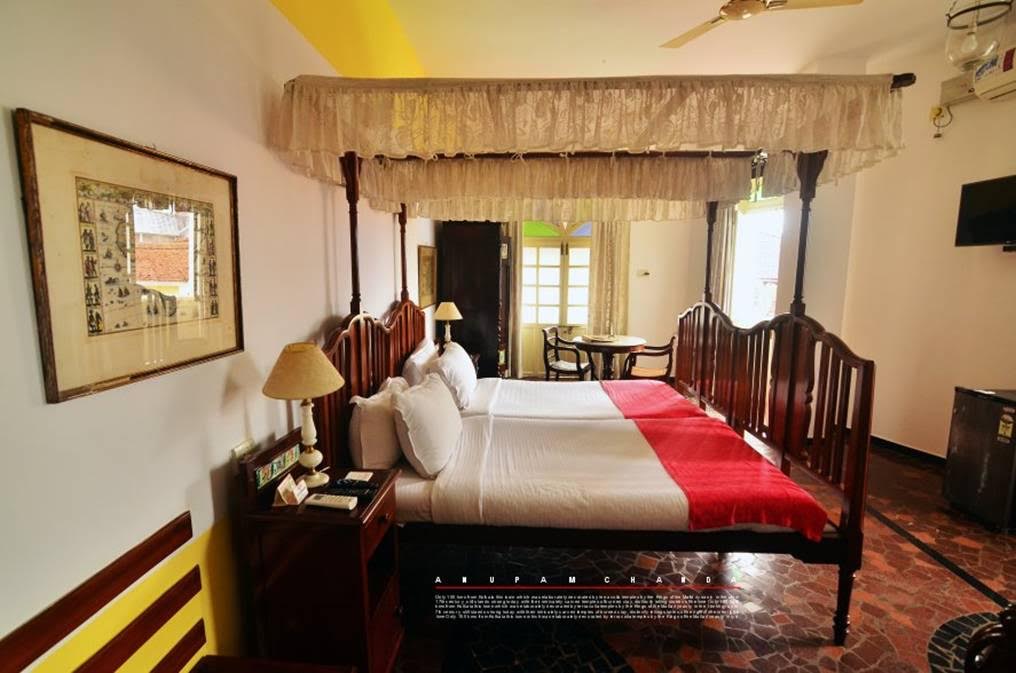
Collectively all of this makes Goa what it is and what it stands for today. A place which becons you to come back again and again for it’s unique offerings. And then with all the Portuguese influence in cuisine and heritage tours when you need some laid back time…head off to one of the north goa beaches for some exclusive leisure time in seclusion with the landscape, which brings back a world full of visitors many of who secretly wish to stay back forever like the Portuguese.


