The Stealth Of The Sundarbans
8 min read
By the time the initial rush of getting on a boat headed towards Sundarbans subsided, we were treading down the middle of the Matla river headed for the interiors of the self-sustaining ecosystem, a world heritage site, the largest delta on earth, a biosphere reserve, and the biggest mangrove tiger habitat comprise 104 islands covering an area of 3,500 sq kms. Cloudy skies choppy waters excited faces crowded deck buoyant spirits bright dresses fresh river breeze fried prawn and loads of excitement.
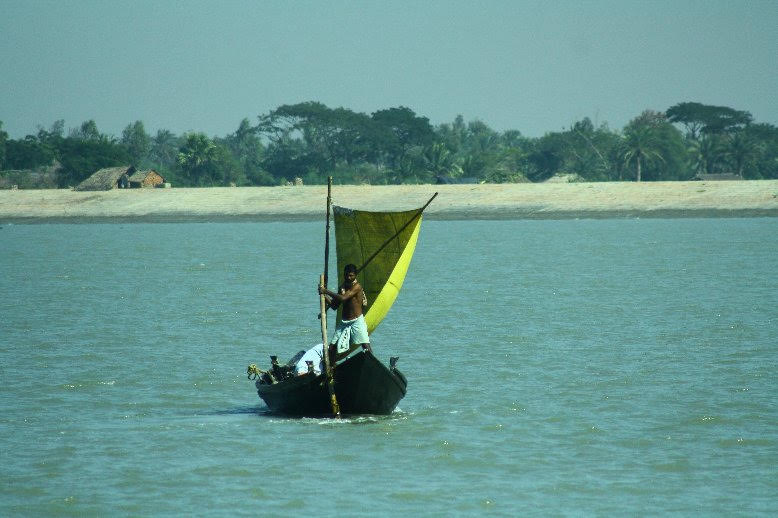
Two hours of sailing and we were into wider spaces. With low tide the engine was on a smooth chug as the coastlines got thinner. Soon we were crossing confluence territory where as many as five, seven and sometimes even eleven huge rivers met. No coastline, eye balled water world, frequent movement between bow & stern trying to figure coordinates, tourists crowding deck . The only man at ease was the 42 year old boatman Tarok Mondal. Turned out quite a sport, engaged in multitasking from the beginning, all smiles captains the ship in complete control.
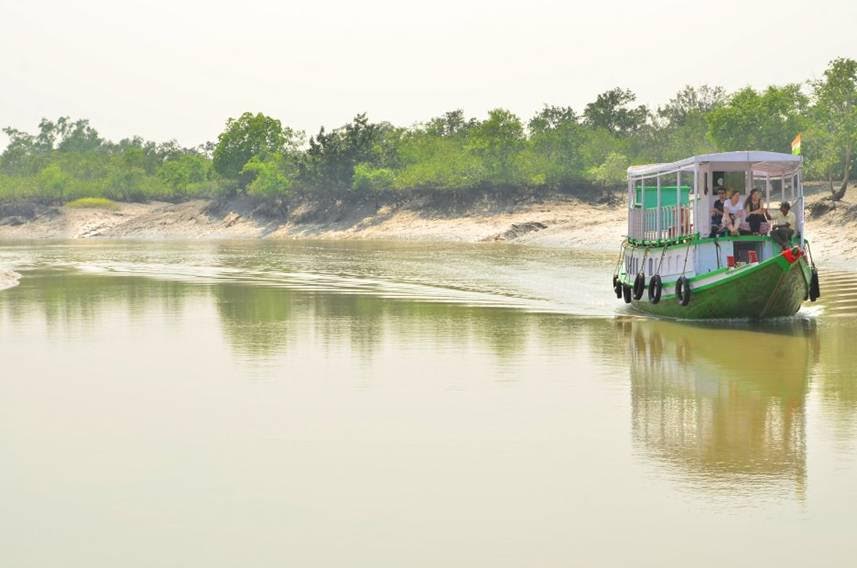
Quite a guy as he revealed slowly, post a late lavish crab curry lunch sailing into the dark blue horizon towards the Bay of Bengal. Boatman for three months, honey collector, wood cutter, occasional farmer otherwise, offering prayers to Bonbibi (forest Goddess) has become a daily ritual for Tarok. His house in Himalganj is under construction after being washed away in Aila in May 2009.
And for him venturing into the forests for wood to build the roof of his semi Pucca house is almost risking life everyday, but he falls back on his prayers. ‘I have to complete construction before next monsoon arrives’ says Mondal as his voice cracks. Fear of tiger attack was visible in his eyes.
Dipak Saha the on board Sundarban Tiger Reserve guide stated official figures show in 2010 alone 27 incidents of Tiger straying were reported from the Sundarbans compared to only 9 in 2008. Though forest dept. had it’s explanations experts believe rising salinity is perhaps the common thread linking both the predator & prey in this mystic mangrove hideout.
As we know Himalayan glaciers are receding rapidly due to global warming and the rate of retreat in the last three decades is over three times than the rate in earlier years . Glacier retreat has implications for downstream river flows which is reflected through lowering of salinity in Sundarbans. Tiger straying indicates that salinity is penetrating deeper into the forests with more and more tigers straying from south to north.
Of the 104 islands 48 are left with forest cover only on their fringes and a tiger needs to ambush its prey before killing it. Due to less forest cover tigers are finding it difficult to hunt and are straying into villages for easy prey. Not only animals, trees like baine gamu goran hethal motgora kali gorankakra gorjon keowra etc. which were mainly found in the southern region can be seen in the north now. Experts say a rise in salinity will further degrade the coastal water quality and reduce the overall system productivity. Birds commonly known as waders like eastern curlew Whimbrel and sandpipers can’t be sighted post the Aila.
Though this is not linked to salinity there’s no doubt that the entire system is under severe threat. The rise in water temperature with the onset of fish & shrimp disease could spell doom for the entire system with the bhetki eelish parshe bangan payra chada datne lucho koi bhol vanishing in no time. The only survivors maybe proper protection of the mangrove cover.

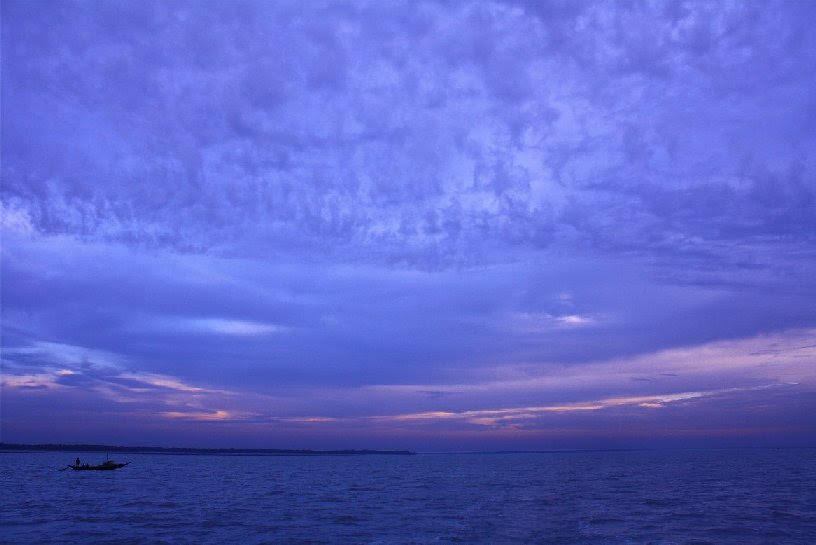
Zipping along a creepy mangrove lined creek not wider than a couple of 20 foot homemade skiffs in the purple after dusk, we reached another sort of a semi confluence of several creeks. This track informed as he killed the engine & dropped the heavy iron anchor, will be our hut for the night. Post sunset dramatic sky, surrounded by thick mangrove kharis, a few more boats at a distance, small fishing dinghies returning home against the horizon, soundless except chopping water against the boat, glowing kerosene lantern on the deck as the party started.
A modest vessle, the boat had seperate sleeping cabins, dining space, tail & attached toilets, kitchen and a huge deck. I later learned it takes 6 months to build one and costs Rs 8-10 lakhs which breaks even in one tourist season. As we settled on the deck for the evening we met Sheikh Pradip the cook for the first time. A localite from Ghoramara island, quite an expert in prawn curry & mutton kassa who narrated another amazing story over the next few hours. For the people of the Sundarbans, adaptation is critical for survival.
For even if we don’t produce any carbon for the next 100 years, temperature and sea level will continue to rise, inundating the islands and forcing the islanders to migrate. Our evening ended with one question – will we continue to disown them and look the other way ? Or will we demand that they get their rightful dues ? Before we could get to what’s that…dinner was served & right after we resorted to our cold swaying beds obediently and drifted off thinking how far we were from civilization, floating on a wobbly boat at midnight in the heart of a tiger infested dense dark jungle.
Sundarbans is a demanding home to those who live there. It requires much to survive, regardless of gender. Living and working in the Sundarbans is dangerous. And just as the men, women’s lives are equally challenging here. Their lives are shrouded mostly around prayers to Bonobibi, humility and gratitude, ingenuity, and tolerance, yet they do not have the power of the goddess.The women of the Sundarbans are practically unknown outside their direct social relationships. Women here manage the household as usual and often help the family survive financially.
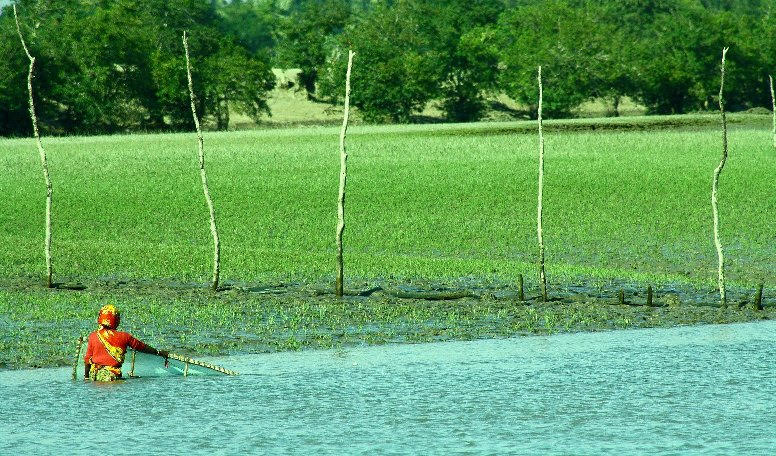
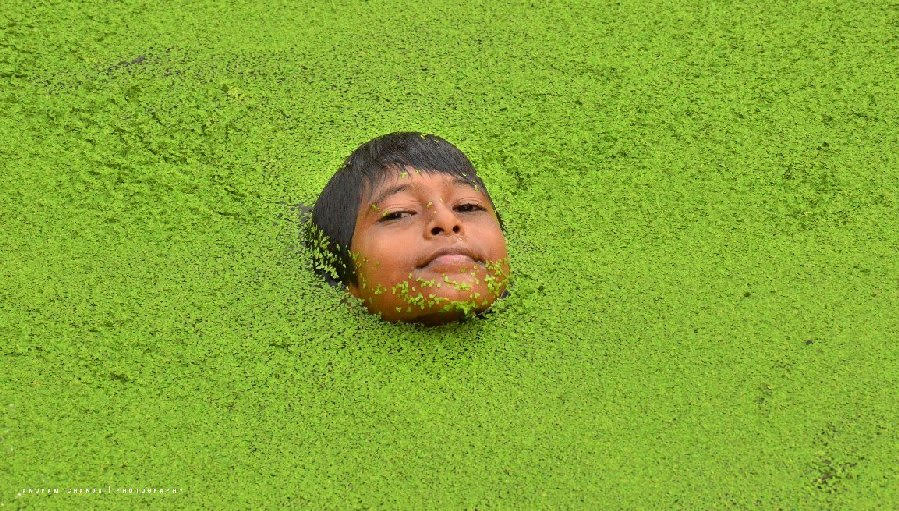
Some of them cultivate on family plots while others fish. Prawn fishing is a particularly dangerous job. Women and children move through the waters waist or neck deep, dragging nets behind them to catch their prey. Each year there are cases of women and children lost to crocodiles and tigers but the battle to survive rages on. Sundarbans women tend to marry early , sometimes as early as twelve but when they lose husbands from tiger attacks, particularly if their husbands were not permitted to enter the forest to take fish/honey/wood, they often are forced out of their homes with their children and made to live in widow villages. Here they become sole providers for their families and take on the roles traditionally taken by the men – wood cutting, honey collecting, and fishing.
Healthcare irrespective of socio-economic background is dependent on quacks for treatment over the rural healthcare providers for a number of reasons varying from geographical hazards to cost effectiveness. They are extremely popular for their proximity and patient’s easy availability. Chronic poverty and most importantly a weak public healthcare system forces the majority of the population to depend & believe in alternate methods of health care.
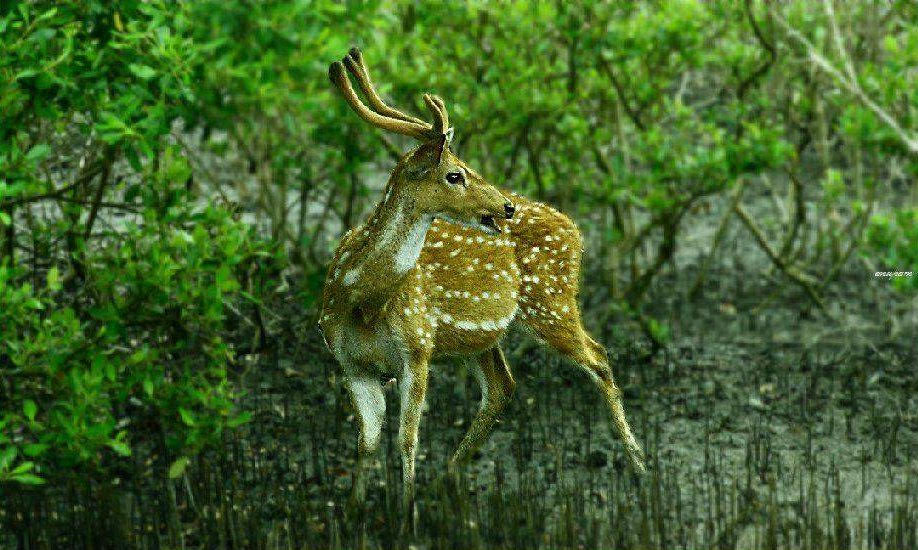
This huge delta is a geomorphological and hydrological fascination. Few areas in the world undergo the transformation visited upon this place by the gods who are endemic to it. Water plays mud into different shapes, sculpting it into new islands and reforming the old. These drowned lands and everything that live in them have adjusted to tides that rise twice daily to a height of 6-9 feet.
Cyclonic activity is more intense here than anywhere else in the world. Tidal waves 250-feet-high rise up the Bay of Bengal, funnelling their way up the channels to disintegrate entire villages built on mud and made of mud – villages that are surrounded and protected from rising waters by mere 20-foot embankments. Both sides of the Sundarbans experience 4-8 cyclonic depressions every year which makes it unique with its human and animal habitats.
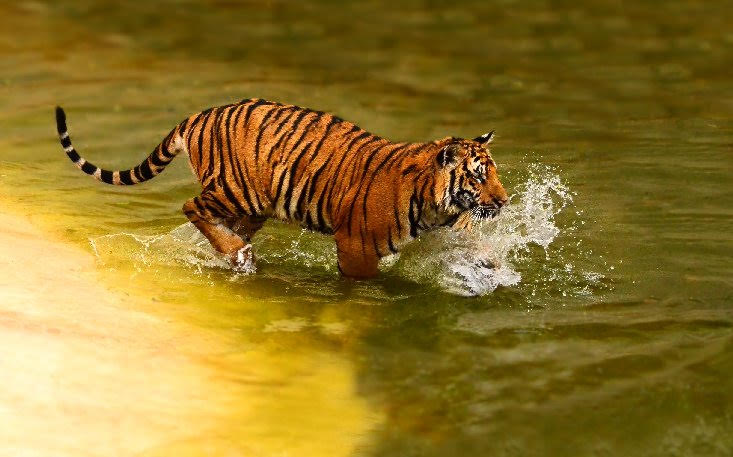
The approx 300 tigers that live here are part of the Sundarbans mystery, it is here in these thick masses of tree roots, writhing mud, and hungry water that tigers stalk humans as prey. The Sunderbans is famous for its tiger attacks and is one of the only areas in the world where ‘man eaters’ exist in their natural habitat in close proximity to humans. Although the Indian Government has estimated that only about about a miniscule of the Sundarbans tigers are actually the man eating type, attacks are regular on locals entering the reserve for honey, firewood, and other products.
The reason these tigers kill humans is unclear. One theory is that the salinity of the environment somehow gives the tigers the taste for human blood. Another is that the ingestion of so much salt damages a tigers liver and kidneys, making it irritable. More likely, the tiger has become accustomed to the taste of human flesh as a result of the cyclones and floods which carry dead bodies down the water channels or strewn about to decompose. Sundarbans tigers are like no other.
They attack in the mornings and evenings between the hours when people enter and leave the forest. They swim, hunting in the water, hiding among mangrove roots as the fishing boats pass until they spot an opportunity to approach from behind. Despite their size and weight, they stealthily sneak up on their victims from behind, typically grabbing them at the nape of the neck. When killing a deer, they embed their canines into four spaces in the vertebrae, a near lock-and-key fit. This method of killing is almost immediate. Stories run in the region that tigers take their prey with no trace.
Men on small fishing boats hear a splash only to discover that one of their crew is missing. Perhaps they get glimpses of the wet tiger slinking up the mud bank of the shore dragging its meal by the neck. Tigers have been known to swim out to larger boats and leap aboard. Those on board may begin to call out ‘Ma’ or mother, a word meant to hail the goddess Bonobibi but legend has it that the echoes of someone’s scream at facing a tiger is also devoured by the tiger. No one hears the scream as the tiger takes its prey.
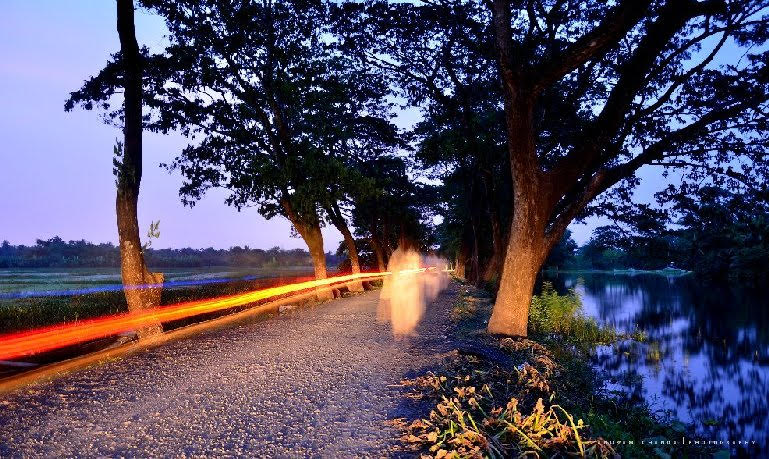
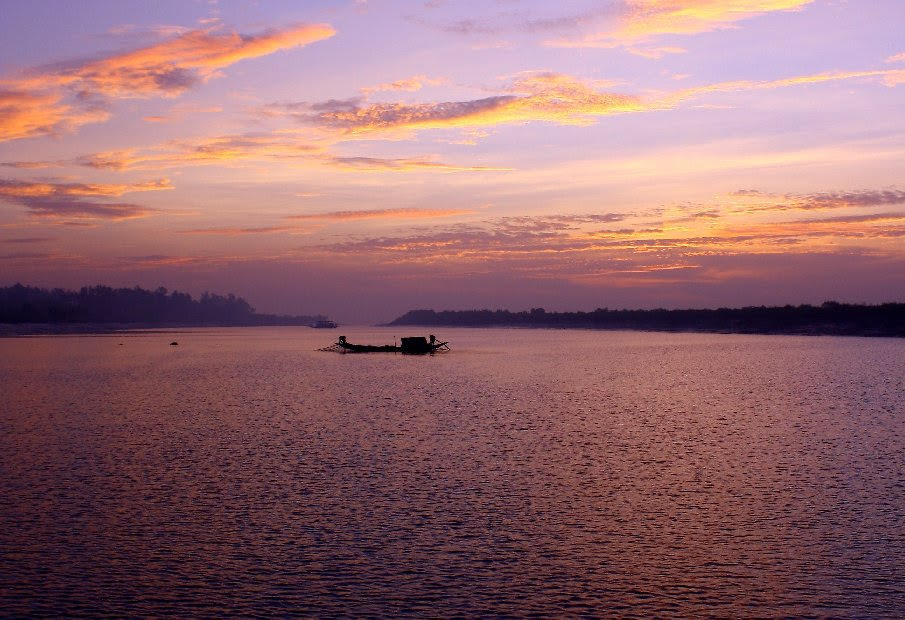
Dawn was an unforgettable experience with primary colors raging non-stop losing battles with their fast evolving secondary counterparts, with the complete color wheel on an intrepid kaleidoscope display, not to be missed in a place as breathtaking as this. The morning after brought in new thrills as we spotted wildlife at multiple spots making our trip a worthwhile one. As the day moved on the boat reached the jetty marking the end of our trip. Tarok handed me twenty business cards as I left the boat ‘please tell your friends to come and see the Sundarbans as long as it’s there’ his voice was solemn and determined.
For the first time I saw the purple crescents beneath his eyes, heard the fatigue in his voice but even so, he was smiling. The silent eerie of the wildlife around seemed somewhat insignificant to the Tarok story. I came on this trip to see the Royal Bengal tiger in its natural habitat, I came for adventure, for thrills, for all the wrong reasons.
I came to escape the boredom of the routine grind. I suddenly felt embarrassed by my foolish motivations. The disrespect I showed for learning, the ingratitude for my rights and freedom to speech, to privacy, to laughter that many only dream of. Yet I will never regret meeting the Tarok Mondols and Sheikh Pradips. I wish every man could see these people waiting for their homes & livelihoods helplessly going underwater and getting lost forever in the middle of nowhere, with minimal or no genuine collateral, spending night after night wading stealthily in predator country for an uncertain morning next.


